PCOS is Now PMOS: What the Name Change Means for You
A name that finally fits
If you’ve ever been told you have polycystic ovary syndrome - PCOS - and felt like the label never quite captured what you were actually going through, you’re not imagining it. The name has officially changed.
As of May 2026, PCOS is now PMOS: Polyendocrine Metabolic Ovarian Syndrome. It’s more than a rebrand. For the millions of women who’ve lived with this condition - often for years before getting a diagnosis - it’s a name that finally starts to tell the truth about what’s happening in their bodies.
Here’s what you need to know:
What is PMOS?
PMOS - Polyendocrine Metabolic Ovarian Syndrome - is a common hormonal condition that affects around 1 in 8 women worldwide, or more than 170 million people globally. It involves a complex interplay between your hormones, metabolism, and ovarian function, and it can show up differently in every woman who has it.
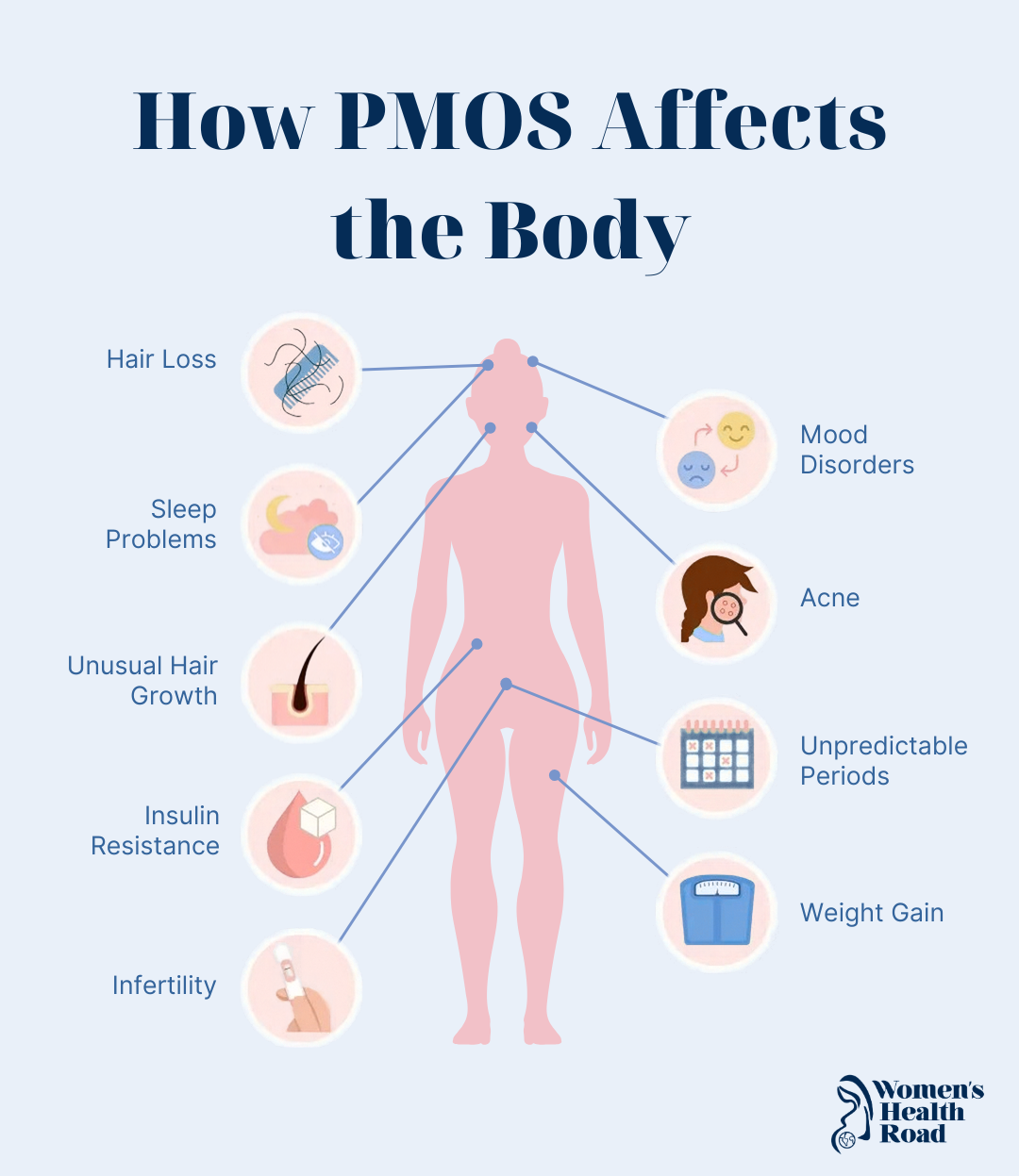
Some women experience irregular or absent periods. Others notice excess hair growth, acne, or changes in weight. Mood shifts, low energy, and difficulty conceiving are also common. Not everyone has all of these symptoms, and not everyone has “cysts” on their ovaries - which is precisely why the old name caused so much confusion.
PMOS is a long-term condition, but it is very much manageable. With the right support, most women go on to live full, healthy lives.
Why did the name change?
The name PCOS was always a bit of a misnomer. "Polycystic" suggested that ovarian cysts were the defining feature - but up to 70% of women with the condition don't actually have cysts at all. The name pointed to the ovaries as the problem, when in reality PMOS affects your whole body: your hormones, your metabolism, your mental health, your skin, your fertility.
For over a decade, researchers, clinicians, and patients around the world pushed for a more accurate name. The process involved more than 22,000 patients, healthcare professionals, and researchers across 195 countries. The result - polyendocrine metabolic ovarian syndrome - was published in The Lancet in May 2026 and formally announced by a coalition of 56 leading patient and professional organisations, including the Endocrine Society.
The renaming is being rolled out over three years, so you may still see PCOS used in some settings for a while - but PMOS is now the internationally recognised standard.
What does PMOS actually mean for your body?
The new name unpacks into three important ideas:
Polyendocrine — PMOS involves multiple hormonal systems, not just the ovaries. Insulin, androgens (like testosterone), and other hormones are all part of the picture.
Metabolic — Many women with PMOS experience changes to the way their body processes blood sugar and stores energy, which can affect weight, energy levels, and long-term metabolic health.
Ovarian — The ovaries are still part of the story, but they're not the whole story. Disrupted ovulation and its knock-on effects on periods and fertility remain central to the condition.
PMOS also has a significant mental health dimension. Research published in 2026 by Women's Mental Health Australia found that women with PMOS experience anxiety and depression at up to 2.2 times the rate of women without the condition. That's not incidental — it's part of the condition itself, and it deserves to be treated as such.
All of this matters because better naming leads to better care. When a name reflects what's actually happening, it's easier for clinicians to assess the full picture, and easier for patients to advocate for themselves
What does this mean for you?
If you already have a PCOS diagnosis, it remains valid - the condition hasn't changed, only the name. You don't need to do anything urgent. Over time, your records and letters will begin to reflect the new terminology.
If you've been told you "don't have PCOS" because your ultrasound didn't show cysts, it may be worth revisiting that conversation. A PMOS diagnosis doesn't require visible cysts - it's based on a broader set of hormonal, metabolic, and clinical signs.
And if you've been living with irregular periods, unexplained weight changes, acne, excess hair growth, or low mood and energy - and you've never had a proper investigation - this is your nudge. These symptoms are real, they're connected, and there is help available.
At Women's Health Road, we look at the whole picture. That means assessing hormones, metabolism, and mental health together — because that's what PMOS actually is.
Ready to talk?
Whether you're newly diagnosed, long-managing, or just starting to wonder if PMOS might explain what's been going on for you — we're here.