

Cervical Screening & Colposcopy
Cervical screening is one of the most effective tools we have for protecting your long-term health. For most people, a routine result means peace of mind and a five-year recall. But if your result comes back with something that needs a closer look, knowing what it means - and having the right support - makes all the difference.
At WHR, we provide cervical screening as part of your gynaecological care, and if you’re referred for a colposcopy, Dr Talat Uppal is here to guide you through every step with clarity and compassion.
What is a Cervical Screening Test (CST)?
The Cervical Screening Test (CST) — sometimes still called a Pap smear — replaced the old Pap test in Australia in 2017. It's a more accurate test that detects the presence of Human Papillomavirus (HPV), the virus responsible for almost all cases of cervical cancer.
HPV is extremely common and in most cases clears on its own without causing any harm. The CST helps identify the small number of cases where HPV has persisted and may have caused changes to cervical cells — so those changes can be monitored or treated early, long before cancer develops.
Do you need a Cervical Screening Test?
I’m aged between 25 and 74
I’ve had any type of sexual contact (with any person, including of the same sex or gender)
I’m a woman or person with a cervix
You should get a test even if you…
have been vaccinated against HPV
are not currently sexually active
have had the same partner for a long time or only had one partner
are gay, lesbian, bisexual, or transgender
have been through menopause
are pregnant
feel healthy and have no symptoms
How to Get Your CST
There are a few different ways to have your cervical screening test done - and the best one is simply the one that feels right for you.
-
Your GP is one of the most common places to have your CST done. It's a quick procedure performed in their rooms, and your GP can also discuss your results and any next steps with you directly.
-
Description teIf you already see a gynaecologist, or prefer to have your screening as part of your broader women's health care, your CST can be performed during a gynaecological appointment. At WHR, cervical screening can be incorporated into your consultation with Dr Talat Uppal.
-
Since 2022, self-collection has been available as an option for cervical screening in Australia — and it's just as accurate as a clinician-collected test for detecting HPV.
With self-collection, you take the swab yourself (in private, in a clinical setting) using a simple kit. You don't need a speculum, and there is no internal examination.
This option can be particularly valuable if you:
Feel anxious or uncomfortable with medical examinations
Have a history of trauma or have found previous cervical screening difficult
Have been putting off your screening for any reason
Self-collection is available at GP clinics and through the National Cervical Screening Program. If you're unsure whether this option is right for you, our team is happy to talk it through without judgement.
See below some more information and infographics from the National Cervical Screening Program:
Understanding Your Results
Receiving your results can feel daunting, especially if the letter or message isn't entirely clear. Here's a plain-language summary of what the most common results mean — and what happens next.
Result
HPV not detected
HPV detected (not 16/18)
HPV 16 or 18 detected
HPV detected + abnormal cells
What it means
No HPV found. Your cevix is healthy
HPV Present, but a lower-risk strain
A higher-risk strain is present
HPV present with cell changes found
It's important to know that detecting HPV does not mean you have cervical cancer — or that you will. In most cases, HPV clears without any treatment. Follow-up is simply about making sure nothing is missed.
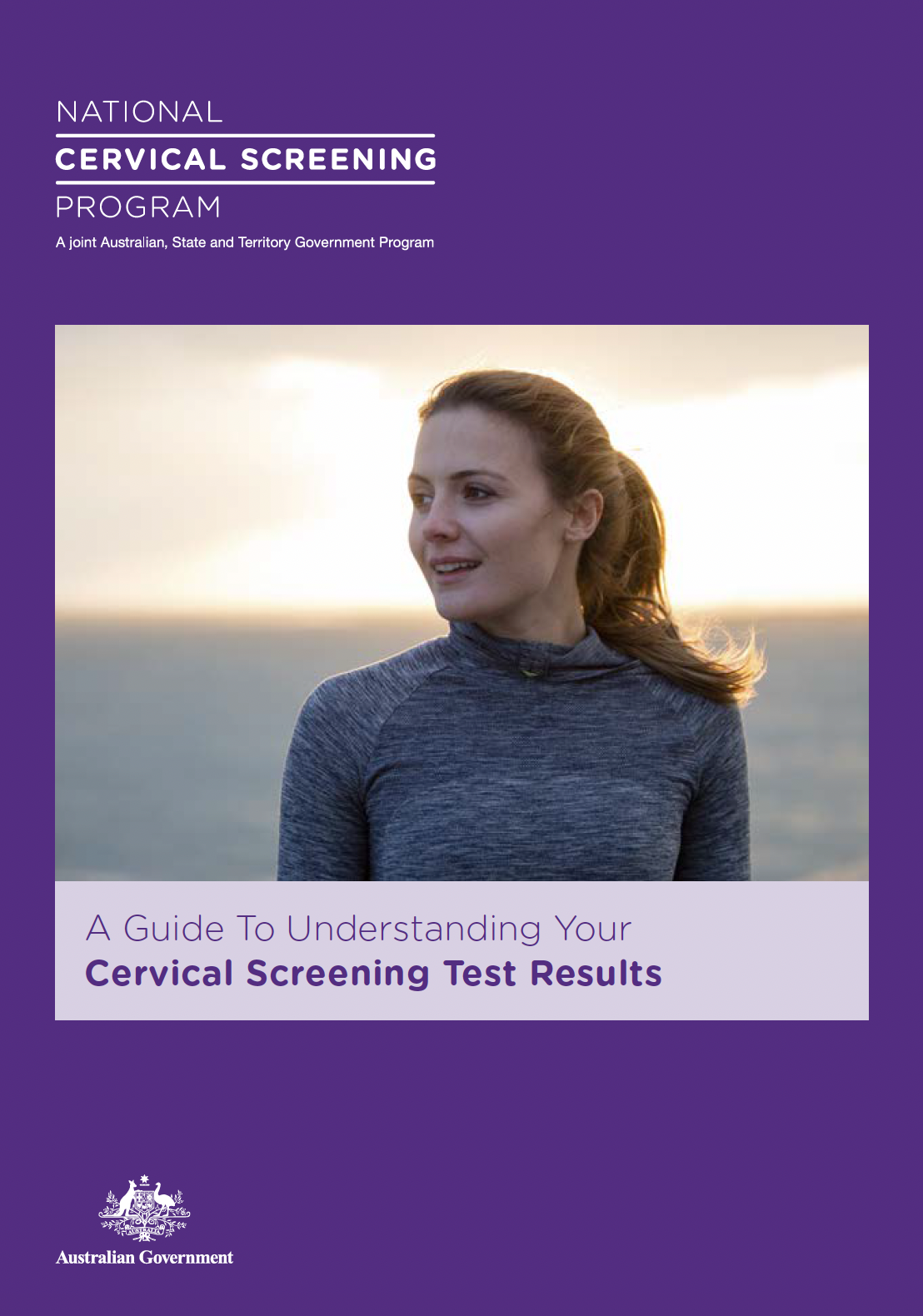
For a detailed explanation of your specific result, we recommend the Understanding Your Cervical Screening Results booklet from the National Cervical Screening Program.
Cervical Screening Patient Resources:
What is a Colposcopy?
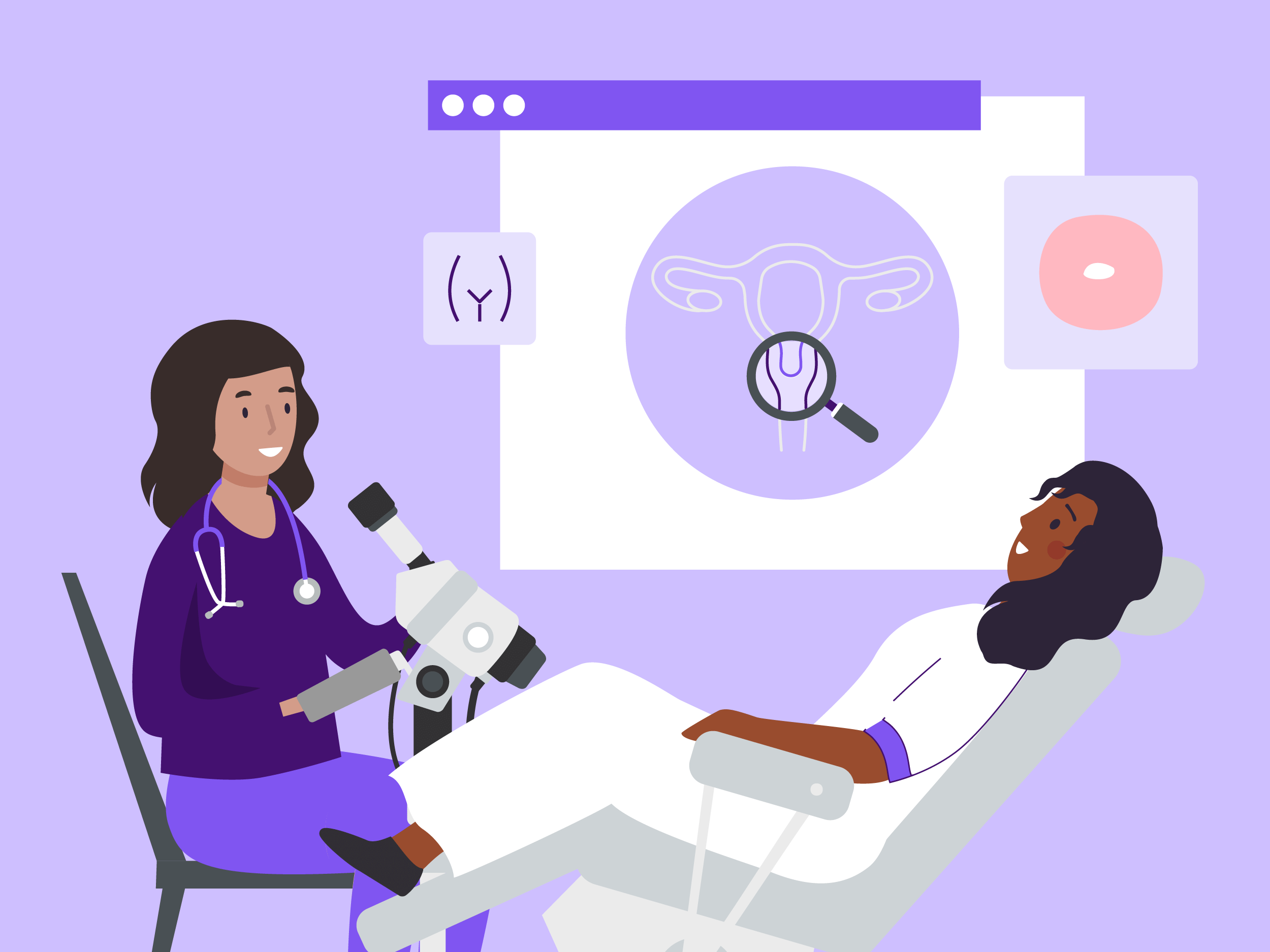
A colposcopy is a detailed examination of the cervix, vagina, and vulva. If your CST result suggests that a closer look is needed, your GP or the Cervical Screening Register will refer you for a colposcopy — but being referred does not mean something is seriously wrong. It simply means a specialist wants to look more carefully.
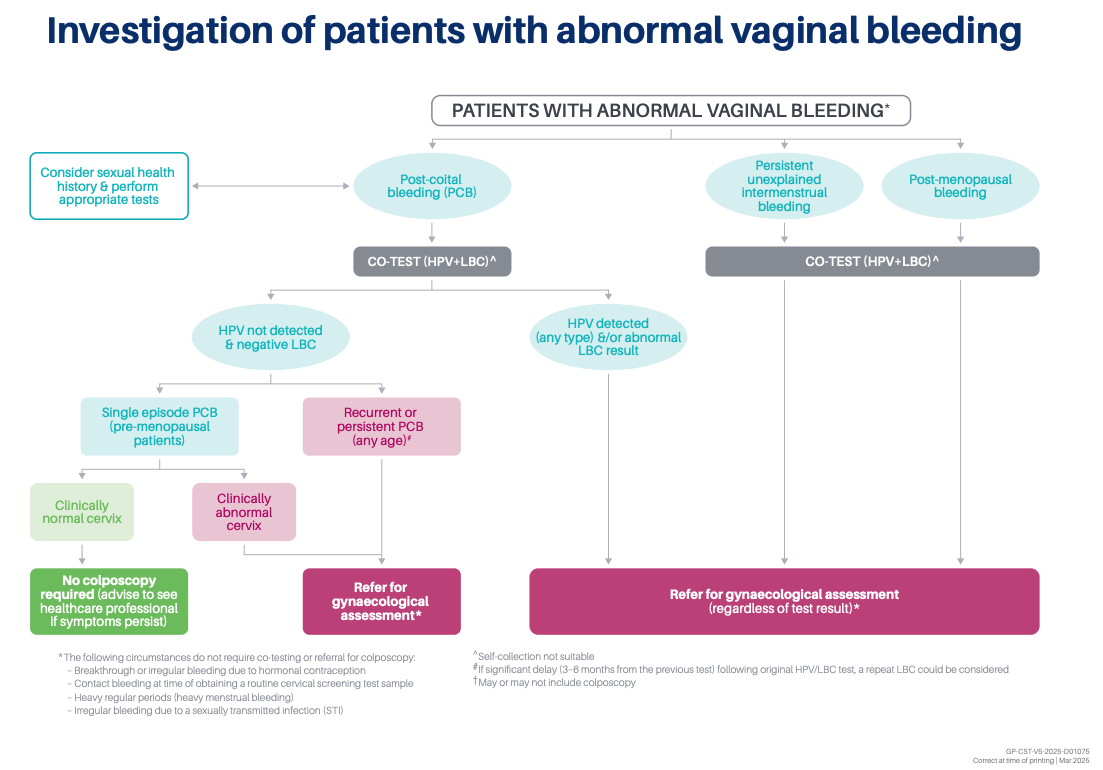
Colposcopy may also be recommended for reasons other than an abnormal CST result — including post-coital bleeding (bleeding after sex) or unexplained intermenstrual bleeding, where a cervical cause needs to be ruled out.
What to expect
A colposcopy is performed in a clinic room, not a hospital, and typically takes around 15–20 minutes. You'll lie on an examination table (similar to a cervical screening test), and your specialist will use a colposcope — a magnifying device positioned outside your body — to examine your cervix closely.
A mild solution may be applied to your cervix to highlight any areas of concern. In some cases, a small tissue sample (biopsy) is taken for further analysis. If a biopsy is taken, you may experience a brief pinching sensation and some light spotting or discharge in the days following.
Is it painful?
Most people find colposcopy uncomfortable rather than painful — similar in sensation to a cervical screening test. The speculum and examination rarely cause more than a feeling of pressure.
If a cervical biopsy is needed
In some cases, a small tissue sample (biopsy) from the cervix will be taken for further analysis. This involves removing a tiny piece of tissue and is over in seconds but can cause a sharp pinching or cramping sensation - similar to a strong period cramp - and some people find it more painful than expected.
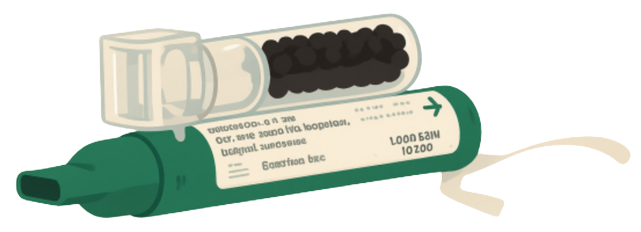
We want you to feel as comfortable as possible. If you would like pain relief during your procedure, Penthrox (Methoxyflurance) - aka. the green whistle - is available at WHR. It’s a fast acting, self-administered inhaled pain relief option that is safe, effective, and widely used for procedural discomfort. You simply breathe through it as needed during the procedure.
If you think you would like to use Penthrox, please let us know when you book your appointment or when you arrive so we can either issue you with a script to bring the device with you, or so we can have one ready at the clinic. You are also welcome to take over-the-counter pain relief such as ibuprofen or paracetamol 30-60 minutes before your appointment.
Your specialist will talk you through everything as they go, and you can ask them to pause at any time.
After your colposcopy
You may experience light spotting or a dark discharge for a few days (this is normal, particularly if a biopsy was taken)
Avoid swimming, tampons, and sexual intercourse for 48–72 hours following a biopsy
Biopsy results are typically available within 2–3 weeks
Your specialist will contact you to discuss results and any recommended next steps
Colposcopy at WHR
At Women's Health Road, colposcopy is performed by Dr Talat Uppal, specialist gynaecologist and WHR Director. Dr Talat brings warmth, expertise, and a genuinely patient-centred approach to what can feel like an overwhelming appointment — because the goal is never just to examine you, but to make sure you leave feeling informed and supported.
We understand that arriving at a colposcopy appointment can come with a lot of anxiety, and we're here to take the time to explain what we're doing, why, and what it all means for you.
Do I need a referral?
Yes — colposcopy requires a referral. If your CST result warrants a colposcopy, you will be referred by your GP, gynaecologist, or the National Cervical Screening Register. If you have already received a referral and would like to book at WHR, please contact our reception team or click the button below.
-
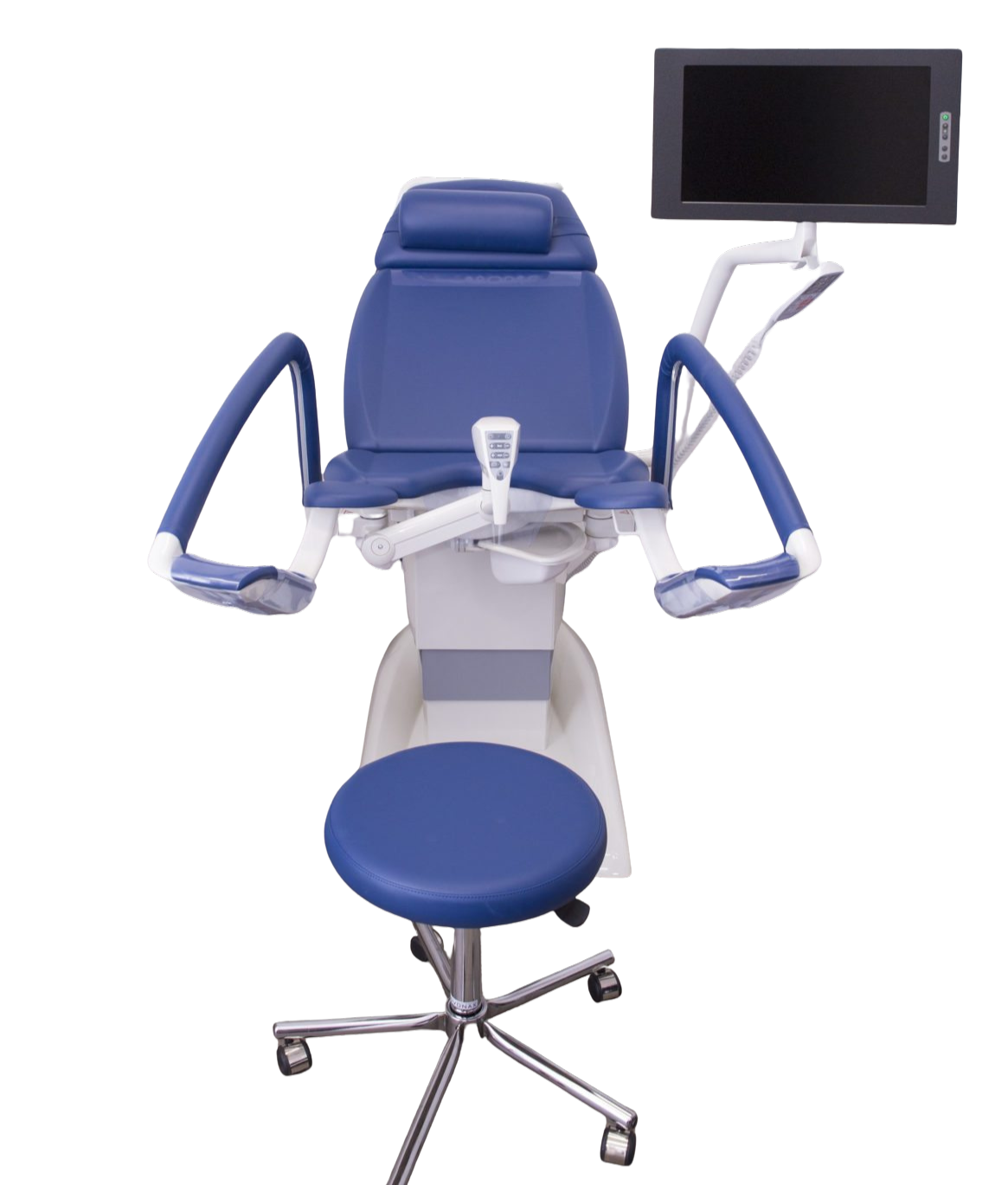
![Gracie Colposcopy Chair]()
WHR's Gracie Colposcopy Chair
This is the examination chair in Dr Talat Uppal's consultation room. The colposcope is attached to the chair and sits outside of the body, using a camera to look through the vagina to the cervix. A photo may be taken and uploaded to your file to use for comparison if a future colposcopy is required.
-
![Australian National Cervical Screening Program Booklet - A Guide to Understanding Your CXervical Screening Test Results]()
NCSR Guide to Understanding Your Cervical Screening Results
-
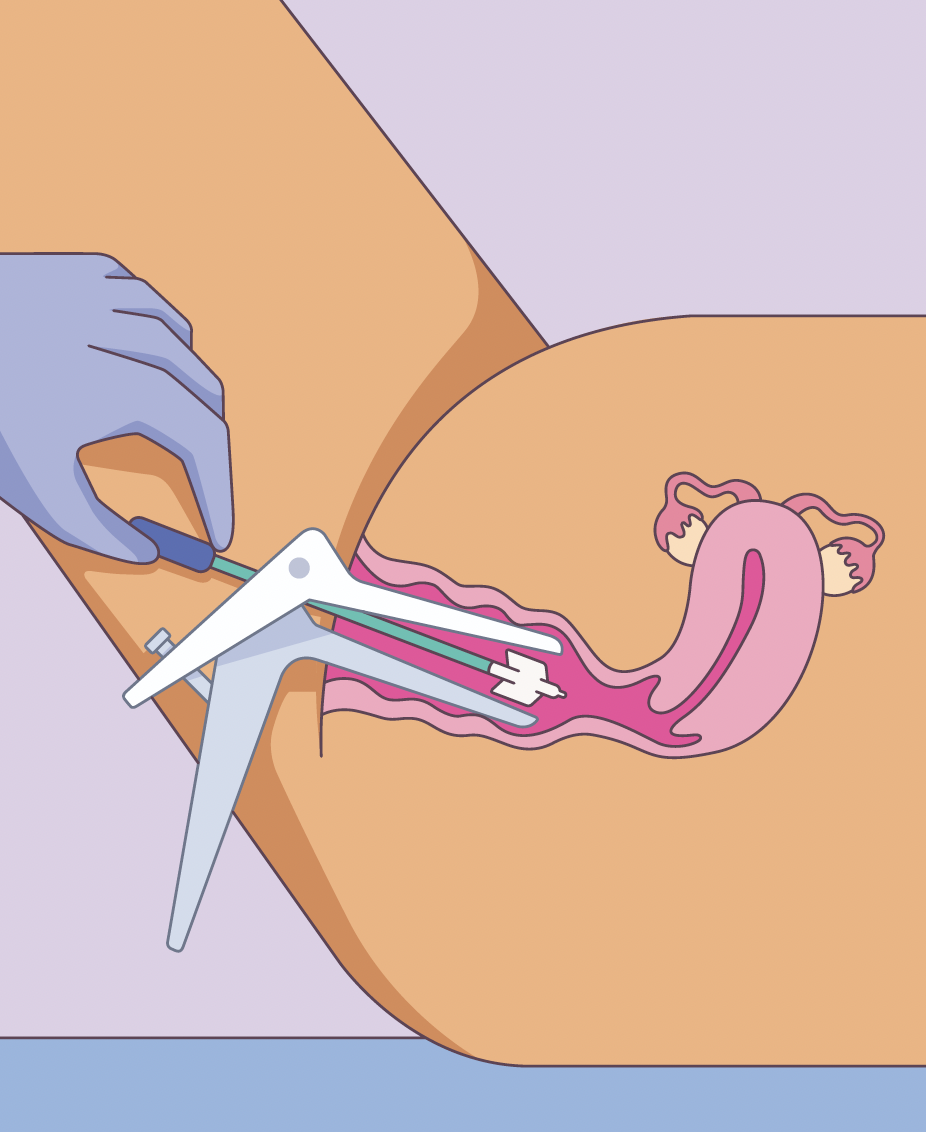
![Image showing a speculum inserted into a vagina for the purpose of viewing and taking a sample from the cervix]()
Clinician Collected Cervical Screening sample
A Speculum is inserted into the vagina and gently opened so the clinician can view the Cervix. A small soft brush is then used to obtain a sample of cells from around the Cervix.
-
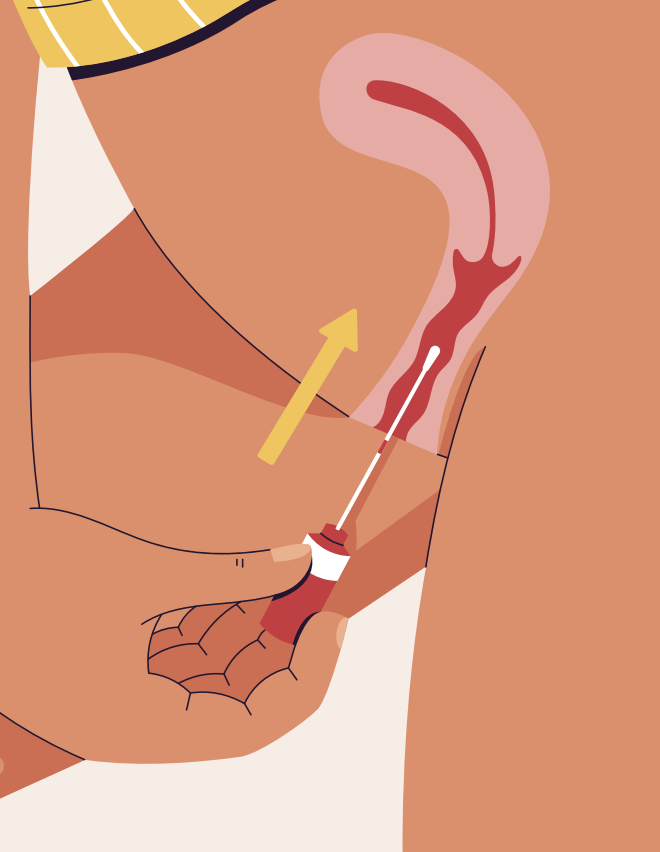
![graphic of a self-collected cervical screening test showing that the swab must be moved in a circular motion for 20-30 seconds]()
Self-Collected Cervical Screening Sample
Self-collection is available as an alternative to a clinician-collected test. Ask our team if this option is right for you.
-
![Penthrox inhaler — the green whistle]()
Penthrox (Pain Relief)
Penthrox (methoxyflurane) is a fast-acting, self-administered inhaled pain relief option available at WHR for patients having a colposcopy or cervical biopsy (also for IUD insertions). Simply breathe through the inhaler as needed during your procedure. If you'd like to use Penthrox, please let us know at the time of booking.
-
![DHM flowchart for the investigation of patients with abnormal vaginal bleeding]()
Abnormal Vaginal Bleeding (Clinician Flowchart)
For GPs and referring clinicians: Douglass Hanly Moir Pathology's investigation flowchart for patients presenting with abnormal vaginal bleeding.