Nearly 1 in 2 women with endometriosis or PMOS live with depression: New National Study Finds
The Beyond the Surface 2026 Report comes from Women's Mental Health Australia, the nation's leading organisation dedicated to improving women's mental health across every stage of life. Researchers surveyed 9,000 Australian women to find out how common mental health issues are, which women are most affected, and what stands in the way of getting help. They also looked closely at how female specific physical health conditions, including endometriosis and PMOS, shape women's mental wellbeing.
What Were the Findings?
More than half (56%) of Australian women are experiencing mental health issues, and 1/4 is likely experiencing severe psychological distress.
The report found that physical health conditions were linked to poorer mental health, but women living with female-specific conditions, such as endometriosis and PMOS, were affected the most.
Women with PMOS are experiencing most mental health issues at significantly higher rates than those without PMOS. 47% reported depression and 39% reported anxiety.
Similarly with women with endometriosis nearly half of women reported depression (48%) and/or anxiety (47%).
Women with PMOS and endometriosis were also 2x as likely to report body image issues and were 2-3x more to report suicide and self-harm.
Women living with pelvic floor disorders reported experiencing mental health issues at significantly higher rates than women without pelvic floor disorders. Depression was the most common at 51% , a rate 1.7x more common than in the general population.
Rates for women seeking mental health support increased in 2026 comapred to other years, however, 1 in 3 women were still not seeking mental health support.
Why are endometriosis and PMOS so hard on mental health?
The Beyond the Surface report makes one thing clear: your physical and mental health aren't separate. The research found significantly poorer mental health among women living with female-specific physical health conditions, and endometriosis and PMOS stood out.
So why the heavier toll? Every woman's experience is different, but a few things often build on each other.
Living with chronic pain: Ongoing pain is exhausting. It interrupts your sleep, makes it harder to work and see friends, and over time it chips away at your mood and your ability to cope. Add in missed workdays, cancelled plans, and the cost and time of endless appointments, and it's easy to feel isolated and financially stretched.
Waiting years for answers: Endometriosis in particular often takes years to diagnose. Many women are told their pain is "normal" or that they're overreacting, and that experience of not being believed can leave lasting impacts.
How you feel about your body: PMOS can bring changes such as acne, excess hair growth and weight changes, while endometriosis can involve bloating, surgery and repeated examinations. It's not surprising that body image distress was higher among these women.
Hormonal and physical changes: PMOS can bring changes such as acne, excess hair growth and weight changes, which can affect how women feel about their bodies. While endometriosis can involve bloating, surgery and repeated examinations. It's not surprising that body image distress was higher among these women. Hormones may also play a more direct role. Researchers are exploring how hormonal fluctuations and inflammation could influence mood, which may help explain why mental health issues are so common with these conditions.
Gendered social determinants of mental health:
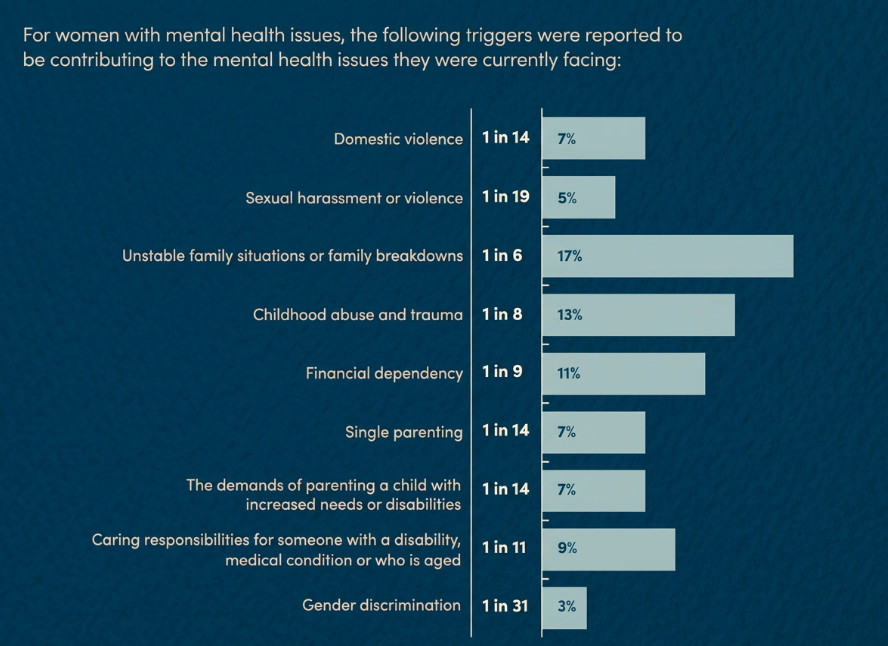
Mental health is shaped not only by individual experiences and biological factors, our social environment plays a big role too. For women these social detriminates to mental health are gendered, meaning they come from social norms and expectations and inequalities that come from being a women. These gender-based influences come from the wider social and cultural world women live in, and they can leave women at greater risk of mental health challenges. The report asked women which gender-related social factors they felt had contributed to their mental health health (Shown in graph below). Their answers showed just how much women's mental wellbeing is shaped by social and structural experiences they face.
Why aren't women getting help?
There has been an increase in help-seeking behaviours among women experiencing mental health issues, with 66% of those women reaching out for support an increase from 57% in 2025. Even though this is a positivie increase their are still signifcant barrier women face to acessing mental health support. These Include:
Financial barriers.
Competing priorities and life pressures.
Lack the time to adress their mental health needs (particularly forwomen in care roles).
1 in 4 women stated they did not feel their mental health was serious enough to warrant support.
20% of women cited they were to embarrassed or ashamed. Many others stated they were fearful of being judged or worried they wouldn’t be taken seriosuly.
More serious barriers, such as fear of losing their job or facing domestic violence were reported by some women.
“I do not know where to start. I feel scared and unsure if anyone can help me. I worry about what others will think.”
Our take:
The message from this report is clear: women's physical and mental health are deeply connected, but our health system too often treats them separately. Women with endometriosis, PMOS and other female-specific conditions are dealing with the emotional impact of their symptoms and hormonal changes, while also having to navigate separate services for their body and their mind. Real change means raising awareness across the community, better training for health professionals, and care that treats the whole woman.
At Women's Health Road, we believe your mental health belongs in the picture.
If you're struggling, contact your GP or call Lifeline on 13 11 14, any time of day or night. In an emergency, call 000.